5th-Grade ELA Assignment


Overview
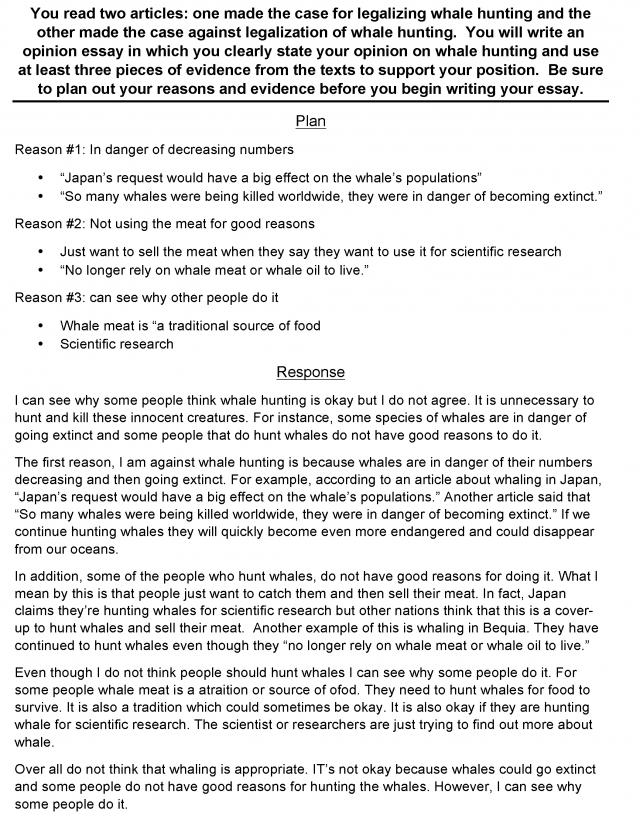
Fifth-grade students read worthwhile non-fiction texts on whale hunting, then write an argumentative essay. One text argues in favor of legalization, while the other argues against it, and students are required to use evidence from the texts to make a case for one of these positions. This assignment exposes students to content-rich non-fiction and requires students to draw on their learning from the texts to write a substantive, analytical essay. The task rubric outlines thorough expectations that are in line with fifth-grade writing and language standards.
About the Text
Title and Author
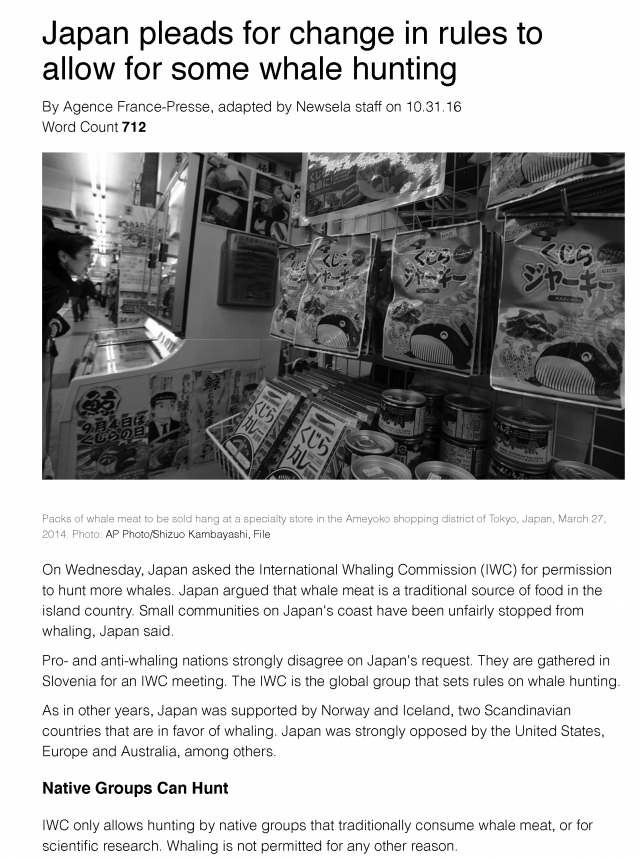
“Japan pleads for change in rules to allow for some whale hunting,” by Agence France-Presse
What is the Lexile Level of this text?
Based on Lexile, which grades is this text intended for?
Is the text qualitatively complex enough for the grade?
Is this text fiction or non-fiction?
Is this text authentic or was it written for educational purposes?
Does the text provide sufficient detail to build knowledge of a worthwhile topic and/or is it worth reading closely and re-reading?
Why is this assignment strongly aligned?
This assignment is strongly aligned because it offers strong texts and a strong prompt:
The assignment exposes students to grade-appropriate non-fiction texts. The texts are opinion pieces on the harms and benefits of whale hunting, published by reputable news outlets. They give students a nuanced picture of a worthwhile environmental and ethical question.
Students are required to read carefully and focus on the key details. Students must understand each author’s point of view, and they must select relevant passages from the texts to support a claim.
Students are required to share what they learned in writing. Students articulate an independent idea about whether or not they think whale hunting should be legal and must support that idea with specific evidence.
Through their written responses, students gain practice with argumentative writing. Students must make a claim, support it with evidence, and organize their thoughts in a logical introduction-body-conclusion format. The rubric outlines clear expectations for both the substance of the writing and adherence to grade-level language conventions.