Kindergarten ELA Assignment

Overview
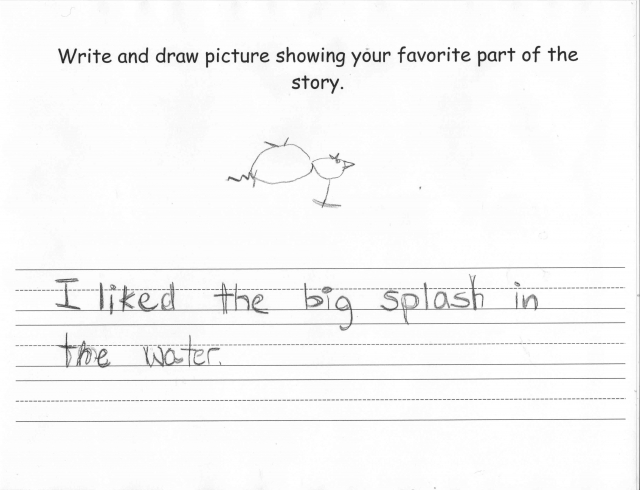
Kindergarten students listen to a text read aloud, then write and draw in response to a prompt about their favorite part of the story. This assignment is weak because the text is not adequately complex for a kindergarten read-aloud and the question posed doesn’t focus students on the main topic or key details, nor does it focus on the craft or structure of the text.
About the Text
Title and Author
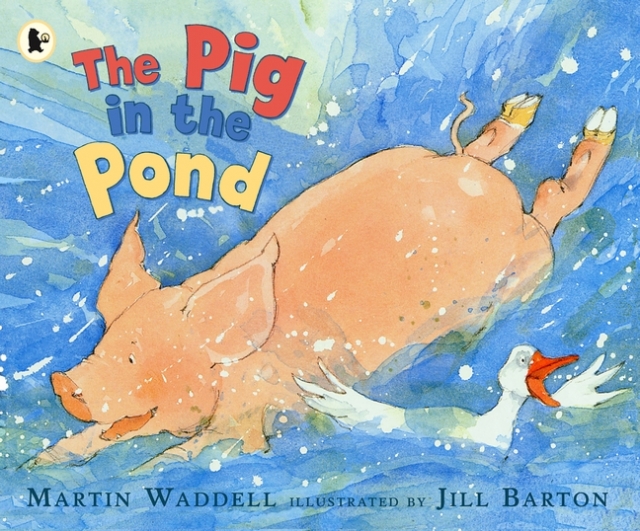
"The Pig in The Pond" by Martin Waddell
What is the Lexile Level of this text?
Based on Lexile, which grades is this text intended for?
Is the text qualitatively complex enough for the grade?
Is this text fiction or non-fiction?
Is this text authentic or was it written for educational purposes?
Does the text provide sufficient detail to build knowledge of a worthwhile topic and/or is it worth reading closely and re-reading?
Why is this assignment weakly aligned?
This assignment is weak because the text is not adequately complex for a Kindergarten read-aloud and the task does not require students to listen with purpose and understanding:
The text is not adequately complex for a kindergarten read-aloud. The Lexile Level of read-aloud text should fall 2-3 grade levels above what students are expected to read independently. During read-aloud the teacher models fluent reading, allowing students to focus on making meaning. Additionally, this text does not provide opportunity to build knowledge and is not worth multiple reads or extended time and attention since the story has little nuance and is easy to follow.
The writing prompt is not appropriate because it does not require students to focus on the important information within the text; students do not have to comprehend what happened in the text with clarity or detail to answer the question. The writing prompt would be stronger if it were specific to the language and details of the text at hand. While it is important for students to answer text-dependent and text-specific questions, the question “What is your favorite part of the story?” does not help students to read with purpose and does not meet the intent of any of the reading standards.
While the task does not effectively attend to the reading standards, it does provide opportunity for students to practice applying their developing language (i.e. grammar and conventions) to their authentic writing, which is important for improving both reading and writing skills. However, this opportunity appears to be incidental rather than intentional as the task directions do not include clear expectations for use of conventions.